

Hey writers! Lots to share this week, up first —
This Thursday, September 24 at 5:30pm PT (8:30pm ET), I’m hosting this month’s Substack Lab, a live Zoom session for Founding Members of Sutoscience.
Think open office hours meets writer’s workshop. Bring your Substack and one specific question (or the thing you’re stuck on), and you’ll get live feedback from me and a room full of brilliant, opinionated writers. Half-baked ideas and “is this too niche?” spirals are welcome. The Lab runs every month, so you can come back and keep the momentum going.
The Zoom link is in the invite post for Founding Members. Not a Founding Member yet? The monthly Labs are one of the perks, along with the 6 Week Substack Sprint.
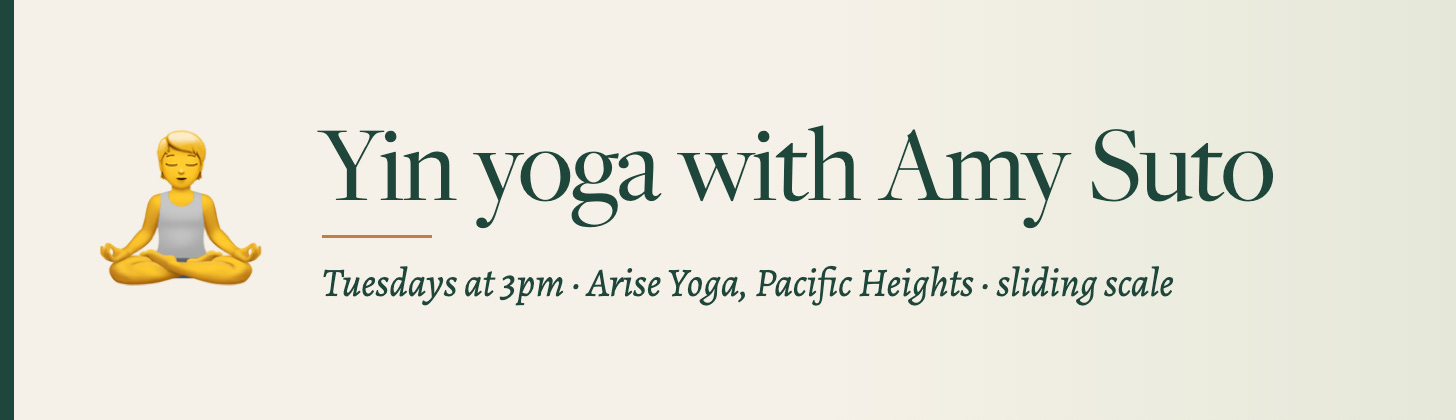
I’m teaching a community sliding-scale Yin class at Arise Yoga in Pacific Heights every Tuesday at 3pm. Yin is the slow kind of yoga: long holds on the floor that get into the hips, spine, and shoulders a laptop spends all week compressing. No flexibility or experience required, and sliding scale means you pay what works for you. Arise asks you to register in advance (no walk-ins), and arriving 5 to 10 minutes early gives you time to get settled in.
If you’re not in San Francisco, send this to the friend who is. I’d love to see you on a mat.

Let Me Be Your Ghost is heading into its final rewrite. The manuscript has been with my trusty editor, Kyle Cords (who also happens to be my husband!), and we’ve been having lots of great story conversations as I get ready. This is the part of writing a book where you have done everything you can do — and someone with better story sense than you gets to tell you what you missed. It’s my favorite part and my least favorite part (usually in the same afternoon).

The book releases this November, and you can preorder it now on Amazon, Barnes & Noble, and Bookshop. Preorder one copy in any format, upload your receipt on the claim page, and I’ll send you How to Write a Memoir, my unreleased craft book, in PDF and EPUB. I’ve been so honored to see the 1, 10, and 50-book preorders roll in, so thank you.
Chapters keep dropping here every Friday for paid subscribers, and chapter sixteen went out this week.
wide awake, with cinnamon rolls
Since getting back from Tahoe earlier this month, I have been cooking up a storm. Last Sunday’s farmers market run (my rankings of the Sunday circuit, if you want them) turned into a Mediterranean frittata and a batch of puff pastry apple cinnamon rolls. September in San Francisco is technically our summer, but the cinnamon rolls don’t know that, and I have decided it’s ~ fall ~.
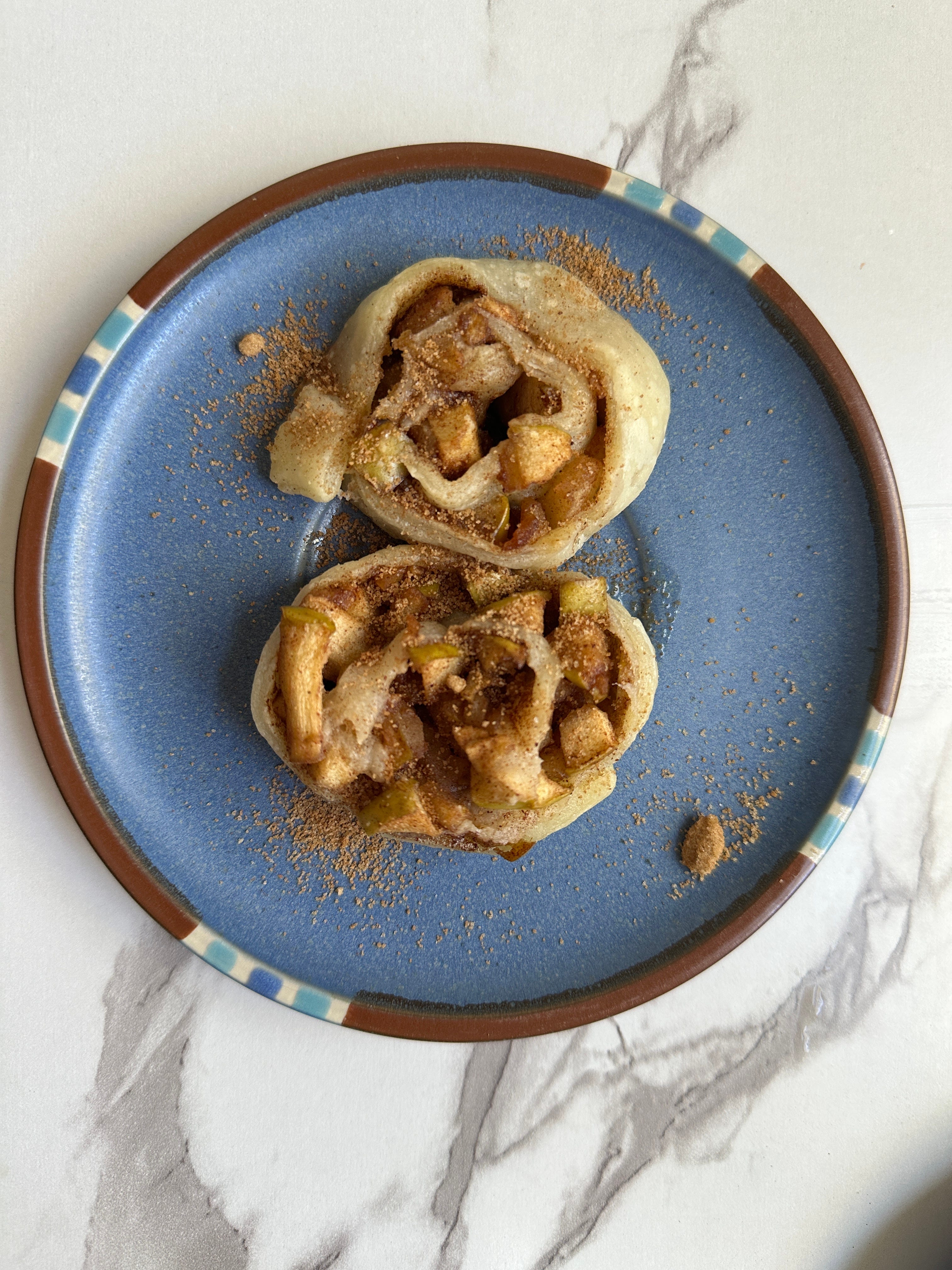
The bigger news is where the energy is coming from. This month I finally got an IV iron infusion, and I wrote the whole story in this week’s essay. My ferritin was 8 at its lowest, a doctor refused to order the test the first two times I asked, and it took five years to climb from 8 to 25 before the infusion took it the rest of the way. Colors look different now. I wake up alert, without having to manufacture it out of highly caffeinated beverages. If you live with brain fog or exhaustion and your bloodwork “looks normal,” the essay explains how to ask for a ferritin test by name (not medical advice, just a novelist who reads her own lab results).
I’m also doing more coverage and reporting around San Francisco events and things to do, and this week it paid off in a fun way: The New Fillmore excerpted my guide to the best places to play tennis in San Francisco in its story about Alta Plaza’s freshly resurfaced courts (my home courts!). The neighborhood is dedicating them this Sunday, September 20, from 10am to noon, with a plaque honoring tennis legend Helen Wills Moody, who picked Alta Plaza for a 1929 photo shoot because, she said, “it’s pretty up there.” If you’re local, everything I’m covering lives on my San Francisco page. I’ll also be creating a San Francisco section of this newsletter that you can opt out of if you’d like to skip news about the city :) I’ll update my Start Here video with how to do this.
In between story conversations about the book, I’m treating this stretch as a maintenance week instead of a growth week, and pointing the new energy at my inbox, which is still a frightening place.
Cooking, it turns out, is a very good companion to a rewrite. The novel has been with me since 2017, when it was a TV pilot, and even now it’s asking me for things. The cinnamon rolls asked for an oven and some patience — and then they were done.
So something to meditate on this week: what have you been powering through on caffeine and willpower that you could actually fix? And what would you make with the energy you got back?
creating
i disappeared to fix my health and write a book. missions accomplished. This week’s essay, in case you skipped straight to the links: the infusion clinic, the Inca Trail on a ferritin under 20, and who my editor turned out to be.
210+ Grants, Contests, & Residencies for Writers at Make Writing Your Job. This is the past week’s edition of the opportunities list: a $25,000 nonfiction prize, investigative grants up to $40,000, and a 3 to 6 month paid residency at EUR 6,000 a month for science journalists.
New reading lists on the blog: ACOTAR Books in Order (with the novella you can skip and where the two new Valkyrie Cycle books slot in), Best Romantasy Books 2026 (10 of them, ranked, with spice levels), Jennifer Armentrout Books in Order, and The Best Blake Crouch Books, Ranked.
For the working writers: The 10 Best Books for Writers, The 11 Best Business Books for Creatives and Writers, and INTJ Careers, from an actual INTJ who has been a TV writer, a freelancer, an author, and a job-board founder.
For the San Francisco readers: my Mamahuhu review is up (Brandon Jew’s fast-casual Chinese-American spot on Clement Street, and the $16 sweet and sour chicken rice plate), and it’s now in my Richmond District restaurant guide, which has a map card for every spot.
reading
Romance is thriving because dating is dead, according to InStyle. Emily Kelleher’s piece has the numbers: romance book sales rose 24% last year, the biggest jump of any genre in print per Circana, and more than 200 specialty romance bookstores have opened since 2023. Meanwhile demographers expect 45% of women ages 25 to 44 to be single by 2030, and Tinx, who has fielded dating calls on her radio show twice a week for four years, says: “We are living through an extremely painful paradigm shift with hetero dating.” The line I’d tape above every romance writer’s desk comes from Lissa Bak, who runs the sold-out Happily Ever After book club at Book Club Bar in the East Village. She never worries about selling the books at a romance event: “I just worry that there aren’t enough.” There aren’t enough. You should write yours!
A small Utah press just landed a national bestseller with the novel New York wanted to fix. Eli McCann’s debut Stitched, about a group of older women quilters who take in two young gay men on the way to a national quilting championship, debuted at No. 3 on Publishers Weekly’s trade paperback list with 20,535 copies and is already in its third printing, 108,000 copies in all. Torrey House Press usually calls 5,000 copies a success. Publisher Will Neville-Rehbehn says the big houses loved the voice and kept sending the same notes: make the women thirtysomethings, and “Don’t set it in Utah. Add a romance.” McCann said no, built a following of tens of thousands on Instagram and TikTok, and the preorders did the rest. To be fair to New York, “add a romance” is rarely bad advice (see above). But an author with an audience gets to say no to notes, and that’s the real story here.
A New York Times rave sold out Marlon James’s new novel in a day, which publicists will tell you doesn’t happen anymore. Dwight Garner called The Disappearers “the novel of the decade and possibly of the century thus far,” the 37,000-copy first printing sold out on Amazon the day after its September 1 release, and Riverhead ordered 50,000 more. Jasmine Vojdani at Book Gossip asked around, and one Big Five publicity director told her that Times reviews of their own books have had no impact at all for two to three years. The follow-up is just as interesting: on Thursday the book made the National Book Award fiction longlist, and the same week it dropped out of Publishers Weekly’s top 25 after debuting at No. 7 with 11,919 copies. So the lever still works — once every few years, for one book, for about a week. Everyone else needs a Jack Edwards or a list of their own.
A formerly self-published romantasy series has the No. 1 hardcover novel in America. Penn Cole’s Burn of the Everflame sold 33,742 copies in its first full week, and Publishers Weekly notes it’s the first Kindred’s Curse book to originate with a traditional publisher. The No. 1 book overall is Theo of Golden, self-published in 2023, at 1.69 million copies for the year. The week before, Rachel Gillig’s The Knave and the Moon opened at No. 1 with 104,183 copies (“book two bested its first-week print unit sales by 36K”), and its officially licensed talking gargoyle figurine sold 6,400 units on its own. R.F. Kuang’s Taipei Story debuted at No. 5 with 21,373, and the MrBeast and James Patterson novel slid from No. 3 to No. 13 in its second week. Self-published to bestseller used to be the exception. Now it’s the top of the list, and romantasy sells merch on the bestseller page.
June was the biggest June on record for trade publishers, $703 million, with adult fiction up 19%. AAP’s StatShot numbers, via Jim Milliot at PW: first-half revenue is up 3.9% across 1,416 publishers, adult fiction is up 8.2% for the half and 19.3% in June (Theo of Golden alone sold more than 55,000 copies that month), and digital audio grew 14.7% to $530.9 million, well ahead of e-books at $444.2 million. E-books are down 2.5%, trade paperbacks are up 8.4%, hardcovers are down 2.6%. Most of you will buy Let Me Be Your Ghost as an ebook in November, so I am choosing to find this motivating.
Tara Westover’s second memoir is about what happened after the first one. Brothers and Sisters comes out April 13 from Random House, nearly ten years after Educated became a million-seller and spent more than two years on the New York Times list. According to the AP, it covers her parents disputing her memories and siblings denying events they had previously confirmed, and the publisher frames it around one question: “Who gets to say what happened?” As a memoir ghostwriter, I can tell you that question sits under every project I take. I gave Educated 5 out of 5, so this one goes straight to the top of my list.
Annie Dillard died on Tuesday at 81. She won the Pulitzer for Pilgrim at Tinker Creek, and The Writing Life, one of her best-known books, runs barely over 100 pages. NPR’s obituary has my favorite story about her: when the press called to ask what she was doing as she learned she’d won the Pulitzer, she said, “I’m washing spinach,” and she went right on washing it for the rest of her life, because she loved to cook. She also told NPR in 2016 that once you write about something you’ve destroyed it, and all you keep is the memory of what you wrote. Every memoirist should sit with that one. Go reread The Writing Life this week.
Leigh Bardugo says this is her last tour “for a good long while,” and she’s blaming the algorithm for eating her taste. With three books out this year (Better Pets, Six of Crows: A Darker Shore, and Dead Beat soon), she told her subscribers there will be no new releases next year and no tour. The reason is the good part. She argues we’ve outsourced our taste to algorithms in everything from music to clothing to fiction, and says she is “deeply afraid” of what social media is doing to her own creative judgment. This is a strong argument for reading 80-plus books a year and posting a lot less than that. The scroll is not reading, and it has opinions about what you should write next.
Substack is hosting its first breakfast for literary agents this fall. The Bookseller reports the book trade is increasingly keen on Substack writers, and the platform is starting a series of events to introduce them, beginning in November with agents. Head of International Farrah Storr says writers need a place that offers more creative and financial opportunities, and the Alliance of Independent Authors notes she pointed to fiction writers serializing books there, not only essayists. (Hi.) Substack also recently opened ad partnerships to writers with at least 100 paying subscribers. A paid list used to be the consolation prize for not getting a book deal. Now it’s the thing agents come to breakfast for — and a reason you may not need them.
