

My new video opens with me saying, “I hate it. It’s the worst.”
I’m talking about the software you need to get a self-published book into bookstores. Then I spend the next 15 minutes teaching you how to use it, because I love you and I want your book on a shelf.
It’s called IngramSpark. It’s the catalog bookstores and libraries order from, and it’s confusing the first time through. I was intimidated by it too, until I’d set up my own books and then a few for clients.
In my book tour diary, I said setting up IngramSpark is its own adventure and that I’d bump a tutorial up my list. Consider it bumped.
If you’d rather read than watch, here’s the written version, with the exact settings I picked.
🏪 What IngramSpark does (and why I put up with it)
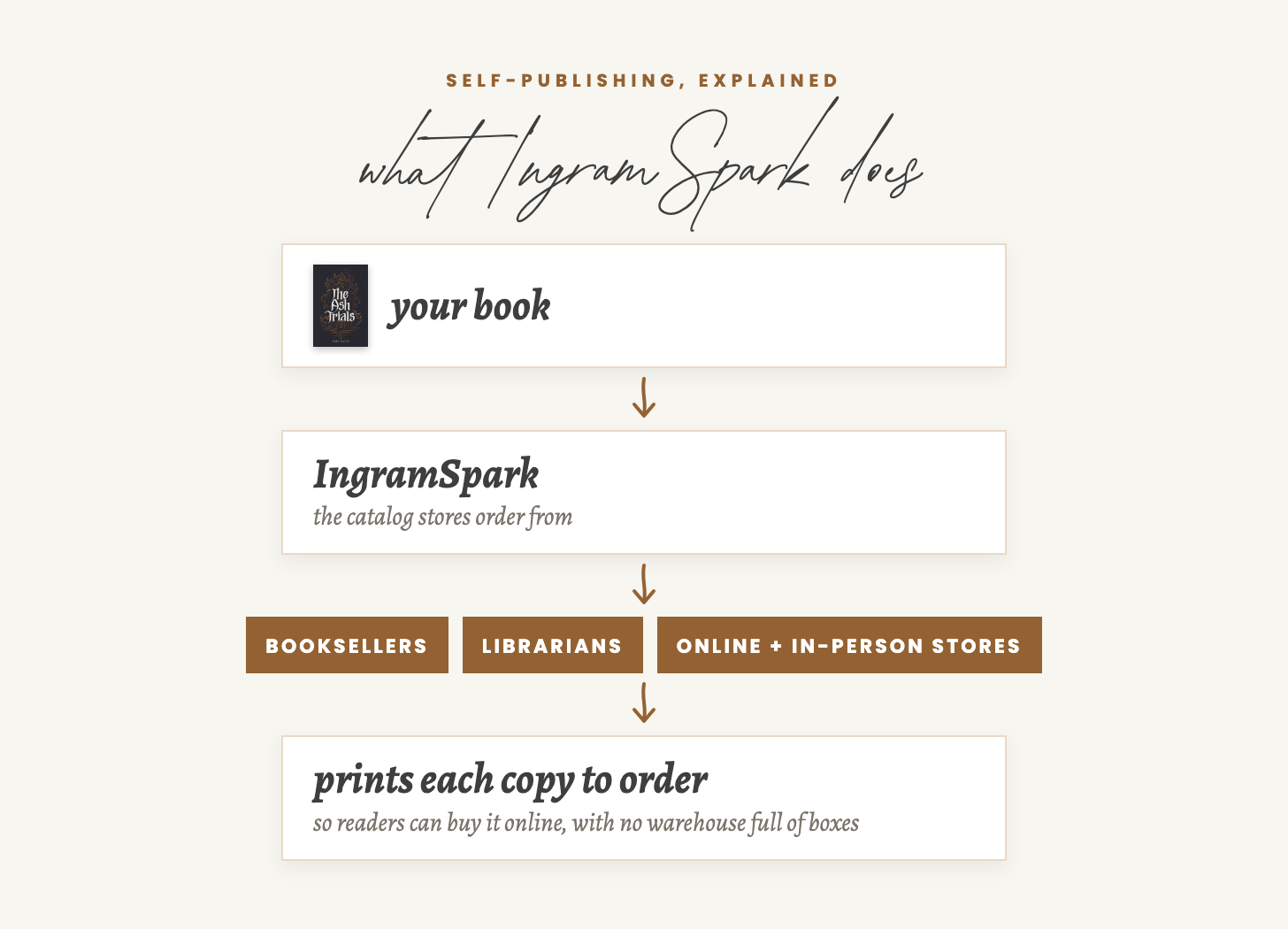
IngramSpark is the database that booksellers, librarians and bookstores, online and in person, use to stock their shelves. It also prints each copy when somebody orders it, so you don’t need a warehouse full of boxes.
I run my books through 2 systems:
Amazon KDP for everything sold on Amazon, which means the ebook, the paperback and the hardcover.
IngramSpark for everything else. That’s independent bookstores, libraries, and the copies I send to influencers and reviewers before a book comes out. It’s great for an ARC campaign.
Both are print on demand. Someday it might make sense to switch to warehouses and big print runs, and I’ll figure that out when I get there. For now this works great. The copies also get printed closer to wherever the reader lives, which is kind of more eco-friendly if you think about it.
⏳ How print preorders work (it’s a workaround)
Amazon KDP won’t let you list a paperback or a hardcover as a preorder. IngramSpark will, and it passes that preorder along to Amazon. So the steps go like this:
List your print book as a preorder on IngramSpark.
IngramSpark supplies the preorder to Amazon, so readers can preorder it there.
On release day, turn on your paperback and hardcover in KDP.
The IngramSpark listing on Amazon goes away. From then on you manage Amazon sales in KDP and everything else in IngramSpark.
Is this annoying? So annoying. It can also create duplicate Goodreads pages, which is the exact moment in the video when I say the thing about hating it. But if dealing with these systems is what gets my books into bookstores and libraries, I’ll deal with them.
✅ What to have ready before you log in
Your final book cover
Your book description
The PDF of your book’s interior
IngramSpark’s cover template, sized for your book. Their Cover Template Generator is free.
Your ISBNs, 1 for each format. That part is getting its own tutorial.
⚙️ Every setting I chose
In the video I set up The Ash Trials, my romantasy novel, as a hardcover and an ebook. Here’s what I picked:
Trim size: 6 x 9. It’s the size I always use.
Interior: black and white. Color is too expensive for a novel.
Paper: groundwood, which is more like a mass market paperback. This one is an experiment. I’ve used white paper before, and I might switch back once I see the proofs.
Binding: case laminate with a matte cover. I’m not a dust jacket person.
Price: $32.99 for the hardcover, which is 516 pages, and $9.99 for the ebook. (My nonfiction ebooks have been 99 cents, because those are me giving information back to readers. I price my fiction a little more aggressively.)
IngramSpark will also ask for your imprint, which is the company publishing your book. I publish through my own. Publishing under your name or under a company comes with different legal implications, so that’s a question for a lawyer and not for me.
💸 The 2 settings that decide if bookstores stock you
The first is the wholesale discount, which is the cut the retailer keeps. Bookstores prefer 55%, and the higher the discount, the less you make on each copy.
I usually do 55% on a new release when I’m working with bookstores. For this book I picked 40%, so I can make more of a margin. IngramSpark makes you check a box that says anything under 55% can limit how many bookstores order your book. I checked it. Outside the U.S. I go even lower, since most of my international sales are ebooks anyway.
The second is returns, the column that really messes with authors. If you pick No, bookstores can’t return your book, and you’re never on the hook. If you pick Yes, they can send back the copies they don’t sell, and you get charged for them.
I’m testing Yes for the U.S. only, with the returns delivered to me, and No everywhere else. That means IngramSpark can charge me the wholesale cost of each returned copy, plus shipping. It’s a little dangerous, and I’ll tell you how it goes. If you don’t want to be on the hook, pick No.
🙃 The 2 mistakes I left in
I made 2 mistakes on camera and kept both, because you will probably make them too.
The first one was a date. My ebook’s release date said 2026, and the book came out on Valentine’s Day of 2025. The second one went like this:
IngramSpark: The interior file cannot be used.
Me: I know that’s not true.
Me, one re-upload later: I had put my cover file in the interior slot.
Sometimes IngramSpark is buggy. Sometimes it’s user error, a.k.a. me.
It also flagged my cover for images that are too high resolution, which is not a thing I expected to get in trouble for. I told it to proceed, and I’ll look at the printed proof before anyone else gets a copy. My modus operandi, as I put it in the video with spicier language, is “we ball.”
A lot of self-publishing is file management, time management and ad spend management. Very boring things! I was scared of all of it at first. Once you’ve done it for one book, every book after that is so much easier.
📬 After you hit submit
IngramSpark takes a few days to process a new title. Then I do the whole thing again for the paperback. If IngramSpark is being kind to me that day, it copies over the details I already typed in.
These systems are more archaic than I would like. I still think this is a renaissance for independent authors, because you get full control over your book, where it’s sold, how it looks and what it costs. And once you have a copy of your own book in your hands, it’s all worth it.
👻 One more book before you go
Let Me Be Your Ghost comes out Wednesday, November 18. It’s my romantic thriller about a memoir ghostwriter who secretly informs on her clients for the FBI, then falls for her final one. (Yes, it’s on IngramSpark too.)
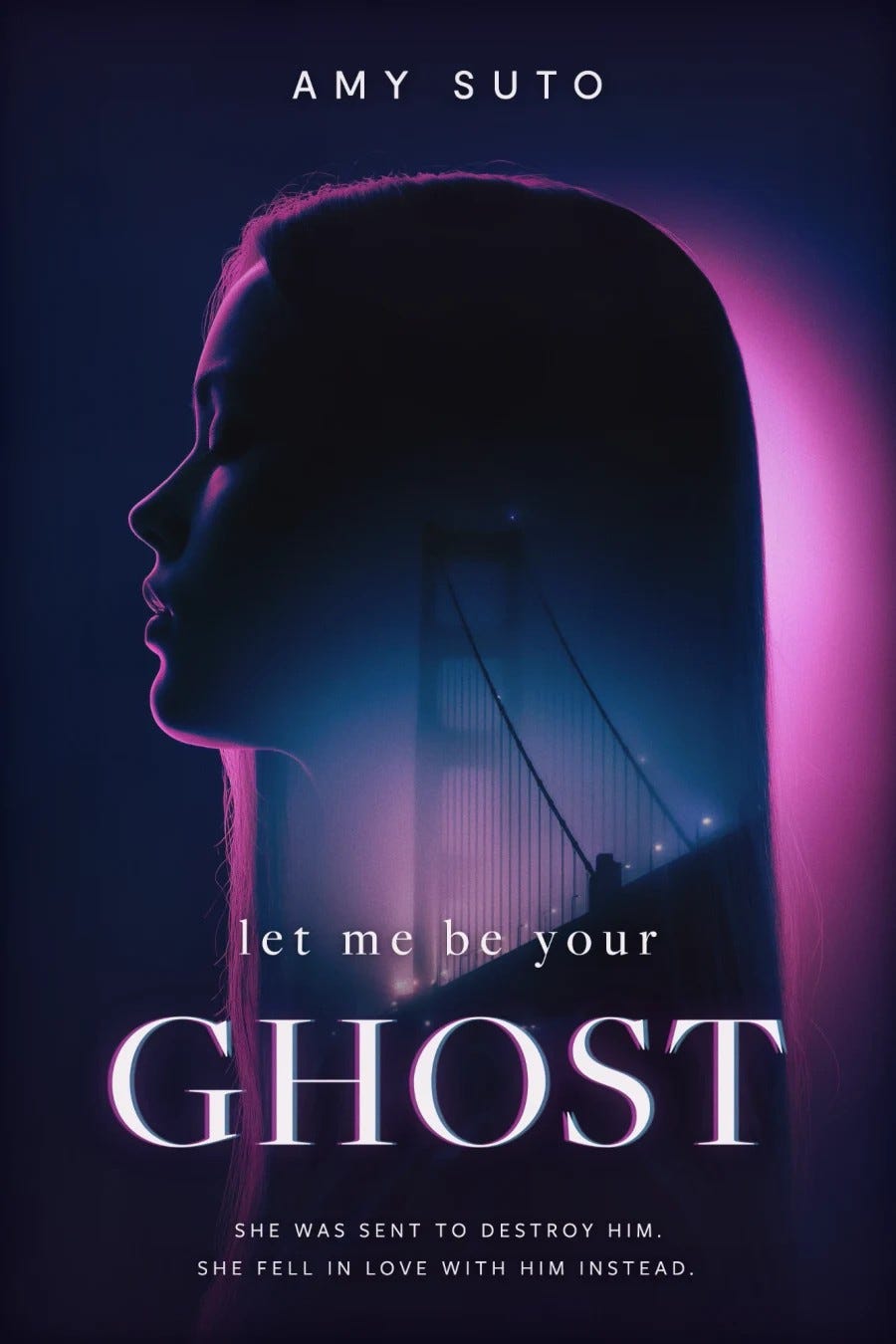
If you preorder it by midnight Pacific on Tuesday, November 17, you get a second book for free: How to Write a Memoir, with everything I’ve learned from ghostwriting memoirs. It has never been for sale, and a preorder is the only way to get it.
Preorder Let Me Be Your Ghost in any format, from any retailer.
Upload your receipt on my preorder page.
How to Write a Memoir lands in your inbox in PDF and EPUB, usually within minutes.
Now go get your book on a shelf. I’m rooting for you. 🍵
-Amy


