

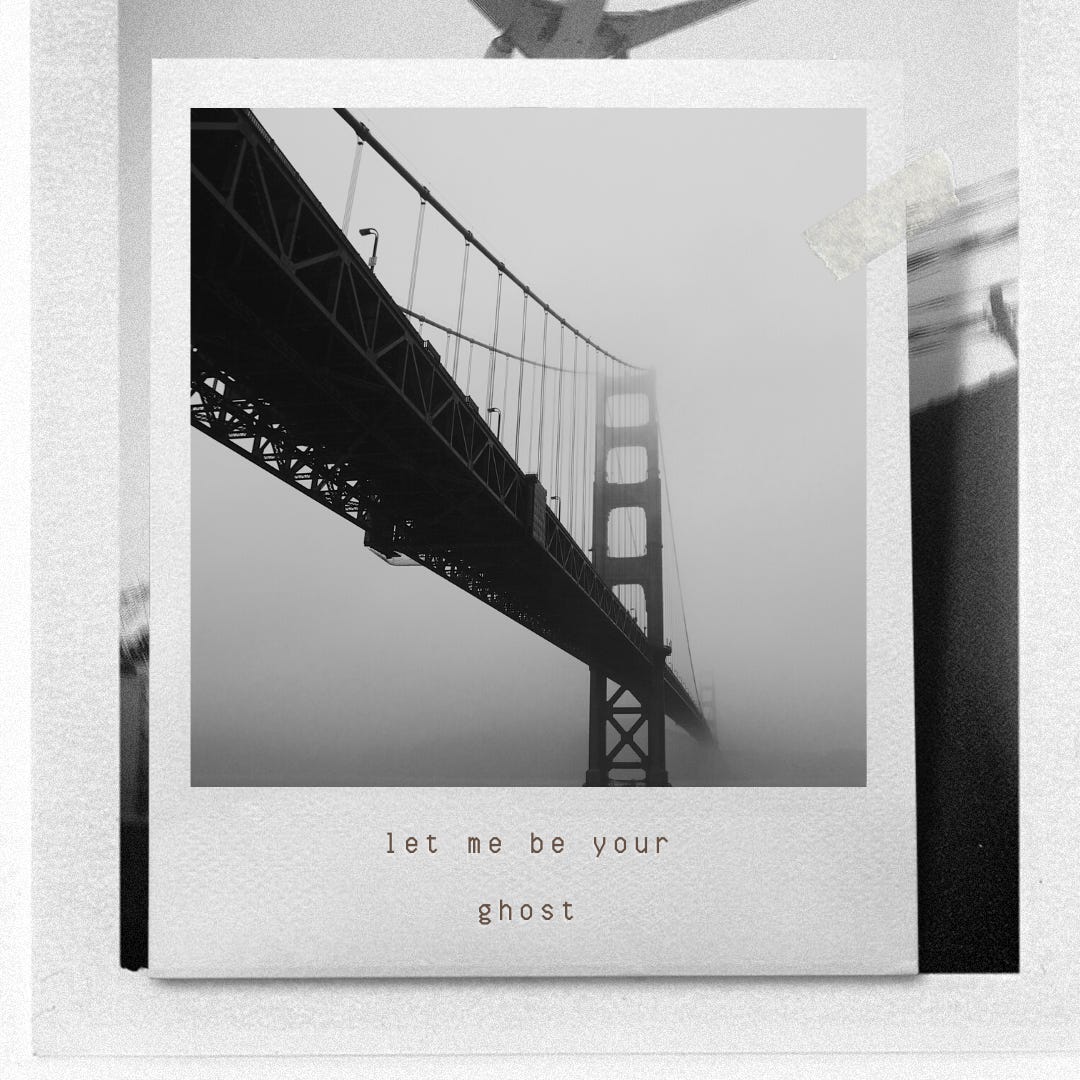
“The past is never dead. It’s not even past.”
-William Faulkner, Requiem for a Nun
previous: about | chapter one | chapter two | chapter three | chapter four | chapter five | chapter six | chapter seven | chapter eight | chapter nine
We did the interviews in the evenings now, after the demands of Crane Industries unhooked its claws from him, in the main house library with the fog pressing up against the glass like an audience.
It was my favorite room on the property and I resented that I had a favorite room on the property. Two walls of books that had clearly been read, not decorated with. A fireplace that burned real wood, piñon and oak, the smoke sweet at the edges. Eze would shed the CEO in stages—jacket over a chair, cufflinks in a stone dish if he was coming from an event where he was required to dress up, and his sleeves rolled—and somewhere in the process the man underneath came up like a diver surfacing, and that was the man I interviewed.
That was the man I was supposed to be sinking. The man the FBI wanted behind bars. I put the thought where I put everything now—in the drawer inside me that was getting hard to close.
“Tell me about the trips,” I said.
Tonight he was on the floor, of all places—back against the couch, forearms on his knees, a glass of something amber abandoned on the rug beside him. My recorder sat on the coffee table between us, spool turning, and next to it the week’s crop of his father’s files, which he kept handing me like a man dealing out his own tarot. I faced him, my left arm on the sofa, a mug of tea to keep my head clear steaming by my stacked knees.
“Which trips?”
“Every year, before your birthday. You mentioned it twice and changed the subject twice. Third time’s the charm.”
Eze looked at the fire for a while. The light moved on his face and found the tiredness under the polished exterior, and I made myself keep my eyes on my notebook.
“My father didn’t believe in birthdays,” he said. “Cake, parties—‘sentimental infrastructure’, he called it. But every year, the week before mine, he’d pull me out of school, out of the company, out of whatever mattered, and we’d go somewhere with bad cell coverage. Iceland once. The Atacama. A lake in Hokkaido where the fog came down so thick you couldn’t see your own canoe.” A muscle in his jaw moved. “No staff. No security, which for him was like traveling without skin. Seven days a year, I had a father instead of a founder.”
“What did you do?”
“Nothing. That was the point. We fished badly. He lectured me about empires and I pretended not to listen. He measured himself two fingers of whiskey every night, never a third, and told me the truth about one thing—that was the ritual, though he never called it out. One true thing a year.” Eze picked up his glass and didn’t drink from it, watching the flickering fireplace through the glass with those entrancing emerald eyes of his. “Some years it was about the company. Once it was about my mother. The last trip—” he stopped.
The fire ticked. I kept still, the way you keep still when a wild thing walks into a clearing.
“The last trip, he told me he’d built the machine wrong,” Eze said. “Those words. Wrong from the foundation, he said, because he’d built it assuming he would always be the one holding it. He said the worst thing a powerful man can believe is that he’ll be alive tomorrow.” A breath, half a laugh, no humor anywhere in it. “Three weeks later he was dead, and I was left with his kingdom of secrets.”
The fog leaned on the windows. I wrote nothing, because some things you don’t make a subject watch you write.
“Your birthday’s in nineteen days,” I said softly. It was in his file. The first birthday of his life with no trip with his father on the other side of it.
“Is it,” Eze said, flat as slate, and knocked back the two fingers of whiskey in one motion, and I understood that he had done the math long before I had.
“For what it’s worth,” I said, “he doesn’t sound kind. Or patient. He sounds like a man I’d have hated interviewing.”
Eze laughed—startled, real. “He was neither. Not once, not ever. He was exacting and cold and he kept score of everything. And he was still my father. That’s the sentence no one is allowed to finish about difficult men. Everyone wants the first half or the second.”
“I write memoirs,” I said. “I only deal in whole sentences.”
His eyes came up from the fire to me, green gone dark in the low light, and stayed. The room got smaller the way it kept doing lately, the air developing a texture, and the recorder turned and turned on the table like a small chaperone.
“I know,” he said. “It’s why you’re here.”
Both meanings arrived at once, the way he liked to deliver them. I looked down at my notebook first. I always broke his gaze first.
I didn’t know what would happen if I didn’t look away.
A small part of me, growing larger by the day, yearned to find out.
